


Hello,
On this morning eighty-two years ago, the German military governor of Paris, General Dietrich von Choltitz, signed the surrender document at the Hôtel Meurice on the rue de Rivoli. It was August 25, 1944. Outside, the city was already in the streets.
The crowds on the Champs-Élysées that day were ten deep in places. People had been waiting for this moment for four years, two months, and eleven days — since the morning in June 1940 when the German soldiers marched into a city that had stopped breathing. On this day, it breathed again. The lights came on. The music played until the next morning. Women kissed American soldiers in the streets and the photographs that resulted became some of the most iconic images of the twentieth century. The joy was real.
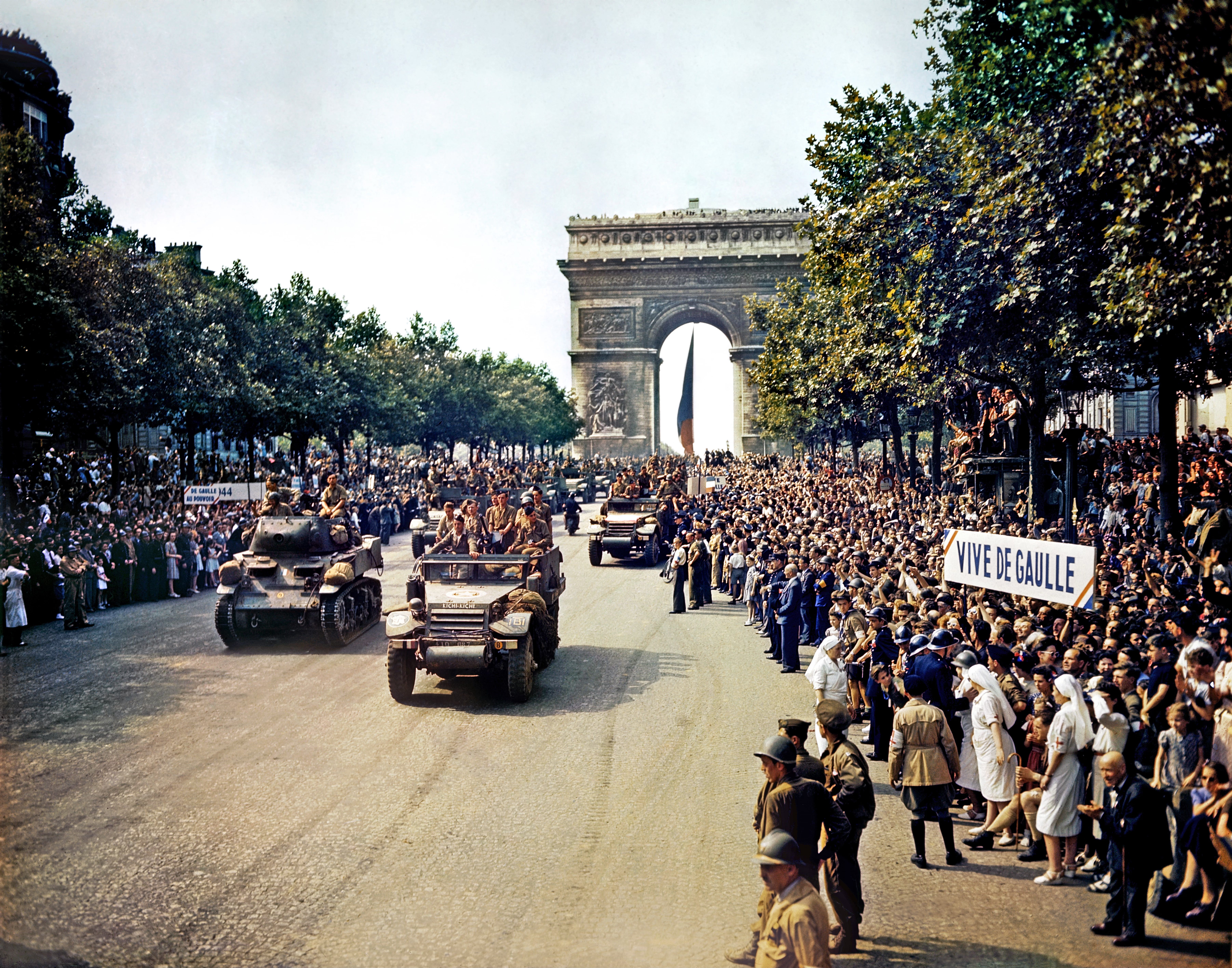
What came after was complicated — the score-settling, the purges, the long silence about what France had actually done during the occupation — and the Paris Decade Portrait, published this week, does not look away from any of it. But today is the anniversary of the joy, and the joy deserves its moment before the complications arrive.
This week on The European Century
The Paris Decade Portrait is live now.
Paris, 1940–1949: The Longest Decade is the most ambitious piece on this site so far — five thousand words covering occupation, hunger, the Vel d’Hiv, the liberation, the existentialism of Saint-Germain-des-Prés, and the unfinished reckoning that France spent fifty years refusing to complete. If you read one thing this week, make it that.
[Read the Paris Decade Portrait →](PASTE YOUR POST URL HERE)
A detail for today
Von Choltitz, the German commander who surrendered Paris, had received explicit orders from Hitler to destroy the city before letting it fall — to demolish its bridges, flood the Metro tunnels, blow up its monuments. He did not carry out those orders. His reasons have been debated ever since: cowardice, pragmatism, a genuine love of the city, a calculation that Germany had already lost and there was no point in adding one more atrocity to the account. Whatever his reasons, the result is that Paris still has its bridges, its boulevards, its monuments, its light.
Hitler’s last words about Paris, reportedly, were a question: Brennt Paris? — Is Paris burning?
It was not.
Thank you for reading. Eighty-two years on, the story of those four years — what Paris endured, what it compromised, what it made, and what it refused to acknowledge — still matters. It matters because it is not only Paris’s story. It is a story about what ordinary people can do under extraordinary circumstances, and what a society owes to honest memory.
Bonne fête de la libération.
Michelle